

Finding Community & Making Friends as an Adult
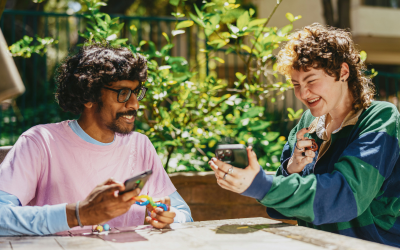
Finding your people
Finding community and making friends in adulthood is hard. You hear a lot about the importance of having people around you, almost as much as you hear how hard it is to meet people. Experience tells us that through good times and bad, it’s good to have people around you. As you face challenges, you know that having friends and community in your corner would help you overcome what you’re facing. You also benefit from having people around you during times of celebration and joy. Yet in adulthood these relationships can be elusive.
But we need each other, we always have and always will.
So, how do we go about finding each other? A lot of media sources tell us that we must find community, often leaving us to our own devices in how we go about doing it.
First off, let's discuss the differences between community and friendship.
Community vs. friendship. What’s the difference?
Before we get into ways to build community and make friends as an adult, let's discuss the difference between community and friendship.
Community is a collection of people with a shared space, identity, belief and/or goal. Communities can be found in neighborhoods, religious spaces, community organizations, work, educational settings, etc. Members are often called to exchange support, care and work to maintain the community.
A friendship is a relationship between two people based on mutual love, care and support. Friendship groups contain more than one of these individual relationships. In difficult times, friends show up for each other. In good times, friends celebrate and seek joy with you.
It’s safe to say that while there may be a lot of overlap, not all of your friends will be in your community, and not all of your community relationships will be considered friendships.
How to meet people in your 30s
At the time of this writing, I am in my late 30s, so that’s the group that I’m speaking about today. But generally, it’s hard to make friends as an adult at any age. If you are able to work, you might notice that a bulk of your most tended to friendships are work friends. This is due to the time you spend with them.
As a child or adolescent, there are structured settings in which you spend a lot of time with your peers (ie, sports teams, clubs). As adults, we don’t have that same opportunity for communal engagement. In fact for many, the final opportunity for communal living, eating, learning and activity is college.
This explains why you hold on to relationships from your childhood. As adults, we are required to put in the work of fostering new friendships, as opposed to just showing up to school and afterschool obligations.
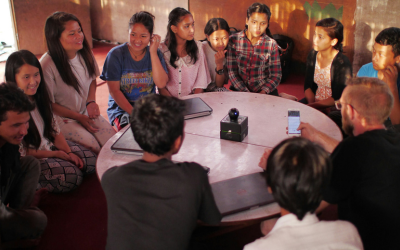
Third spaces.
Sociologist Ray Oldenburg coined the term “third spaces” back in 1989. He defined it as a “generic designation for a great variety of public places that host the regular, voluntary, informal, and happily anticipated gatherings of individuals beyond the realms of home and work.” Basically, a place where you meet people outside of your home that is not school or work.
While many third spaces in the US and other Western countries are behind some type of paywall, accessible third spaces do exist. Libraries and public parks are two of the last free third spaces that exist solely for community enrichment.
Coffee shops are a great option for low cost community spaces (please wear a mask!), as well as community centers for educational meetings, intramural sports, etc.
Let’s discuss how you can find your people in these third spaces.
With third spaces in mind, let’s talk about how you can find your people.
How to find your people
Join a community organization.
Nothing says shared goals like a community organization. Look into local orgs that speak to you. This could include a political party or organization, renters’ union, a religious institution, a park clean-up group or PTA. Local orgs offer the opportunity for folks with similar goals and interests to congregate while doing some good.
As you work with others to meet the desired goals of the org, you become part of a community. Gradually, you may even make some friends in this community.
No orgs in your area? Start one yourself! Talk to your neighbors and find out what people are interested in and what their needs are. Attending local counsel meetings is a great way to find out what the needs of the community are. This part might feel a little scary, and that’s ok! Do your best and learn what you can. You will only get better at it!
Attend planned meetups in your community
Check listings for local events or meetups in your area. You can find these on community bulletin boards or check meetup.com. Meetup.com is a great place to find events that are more curated to your interests.
These meetups will typically be held in third spaces, as mentioned above.
To begin, make a list of activities you enjoy. For example, you might enjoy gardening, hiking and traveling. Next search for local meetups that facilitate these activities.
If there isn’t a meetup, start your own! While not always the greatest place for positive community engagement, Facebook and Nextdoor are two additional apps you can use to get the word out about your meetup.
A couple years back, I started a leftist book club and met some great locals! I ended up seeing many of the same people at protests and political events afterwards. We became members of a shared community!
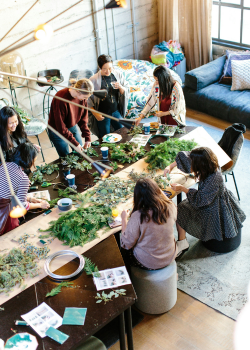
Reflect on older friendships
For those relationships that you’ve been a part of since childhood, it’s a good idea to reflect on them. Is there more you can do to nourish the relationship? Is there more honesty that can be practiced or old wounds that can be tended to?
In one of my favorite books, Radical Friendship, the author challenges its readers to explore the ways they show up in relationships. The reader is encouraged to utilize radical honesty and love while tending to these friendships.
While it may feel counterproductive to this post, you can also ask yourself how the relationship continues to serve you. Have any of your friendships become strained in their later years? Maybe you have changed or your friends have changed, growing in opposite directions, developing different values and beliefs. Many are now asking if it’s worth losing friends over politics. It’s good to remember that relationships in which you do not feel supported in can will take more than they give. Holding on to these relationships may only stymie your search for nourishing friendships and community.
Making friends is hard
Whatever direction you decide to head in first, I wish you the best of luck. Always remember that sometimes things are hard because they’re hard, not because you’re doing a bad job. Keep trying. The more loving relationships you gain, the more energized you’ll feel. Take care.

Thank you for taking the time to read.
We work hard to empower readers to take control in a world where we are commodified and managed.
→Email contact@teletherapywithsarah.com with questions/comments/love.
→Therapy for leftists in PA and FL. Click here. Therapeutic coaching offered nationally and abroad.
→Our bookstore. With monthly recommendations for internal and external liberation.
→Anti-exploitation private practice building business coach. Click here. Group coaching, Click here.
→Liberation life coaching, available internationally. Click here.
→Help us get the word out by using our review guide.
→Ready to get started? Book a free consultation now. Click here.